Who it feeds
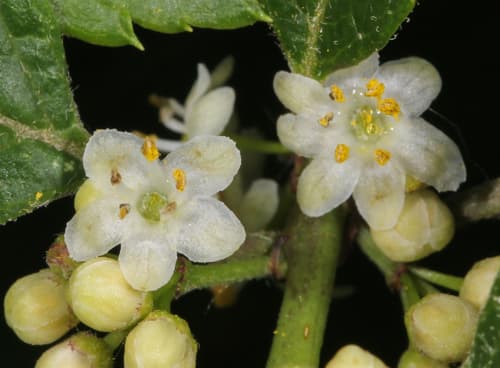
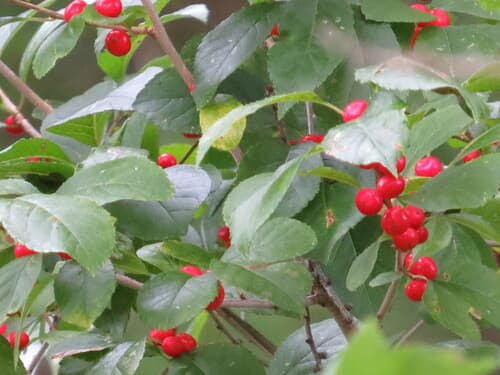
Its tiny June flowers feed small bees; its berries persist into winter and feed robins, bluebirds, cedar waxwings, mockingbirds, and more than 40 other bird species when little else is left.
What it does for the place
A wetland shrub that holds wet soil, tolerates flooding, and provides emergency winter bird food.
The story
The deciduous holly of eastern wetlands, whose bare red-berried branches have decorated New England homes at Christmas for centuries. The Iroquois used the bark as a fever remedy, hence the old name feverbush.
Worth knowing
- Plants are male or female; you need one male for every several females to get berries.
- The berries are mildly toxic to people.
- Birds usually wait until after a few freezes soften the fruit.
Saving its seed
Ripe: Oct, Nov. Berries bright red and slightly soft.
Collect: Clean pulp off in water; seed sinks.
Sow: Rarely grown from seed; divide or take cuttings instead. Needs about 180 days of cold-moist stratification. Double dormancy: needs a warm period then a cold one, up to 18 months. Softwood cuttings in early summer are the practical route.
Seed saving calendar for your zip code →
Plant it instead of
- Japanese barberry: Forms thorny thickets in the forest understory, raises soil pH, and creates humid microclimates that harbor far more Lyme-carrying ticks than native shrubs do.
- Autumn olive: Once planted for wildlife and erosion control; fixes nitrogen and overwhelms open habitats, and birds spread the fruit widely.
- Bush honeysuckles (Amur, Morrow's, Tatarian): Leaf out early and drop late, shading out spring wildflowers; their berries are junk food for migrating birds.