Who it feeds
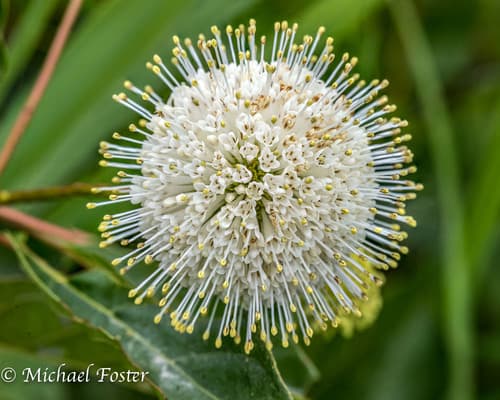
Its nectar-rich spheres draw swallowtails, monarchs, skippers, bees, and hummingbirds in July; the seed balls feed ducks and shorebirds; and it hosts several sphinx moths.
Host plant for: Hydrangea sphinx, titan sphinx.
What it does for the place
It grows in standing water, stabilizing pond edges and providing waterfowl nesting cover, and it thrives in the wettest corner of a rain garden.
The story
A wetland shrub of the whole eastern half of the continent, named for its golf-ball flower heads. It was a favorite of Thomas Jefferson, who grew it at Monticello, and its bark was used as a fever remedy.
Worth knowing
- The flower heads are perfect spheres with hundreds of tiny tubular flowers.
- Wood ducks nest in hollow buttonbush stems in the South.
- It tolerates six feet of standing water.
Saving its seed
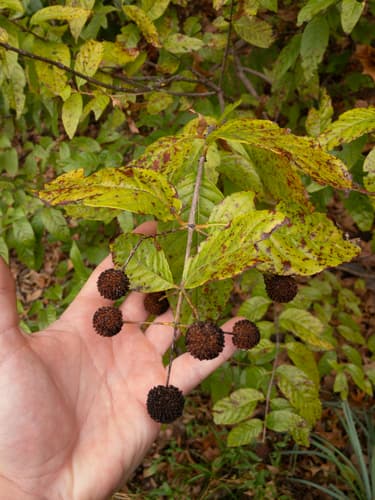
Ripe: Sep, Oct. Flower balls turn to hard brown nutlet balls.
Collect: Pick balls, dry, break apart.
Sow: No pretreatment needed; sow in spring after frost or in fall. Sow on constantly wet soil; seed also floats to new spots naturally.
Seed saving calendar for your zip code →
Plant it instead of
- Japanese knotweed: Forms dense thickets along streams and roadsides that exclude everything else; rhizomes push through pavement and foundations and regrow from fingernail-size fragments.
- Butterfly bush: Offers adult butterflies nectar but hosts no caterpillars, and it seeds into riverbanks and disturbed ground. It is a nectar bar, not habitat.