Who it feeds
Tiger swallowtails, monarchs, great spangled fritillaries, and bumble bees cover the flower heads in August; the leaves host several moth caterpillars; and the seed heads feed birds through winter.
What it does for the place
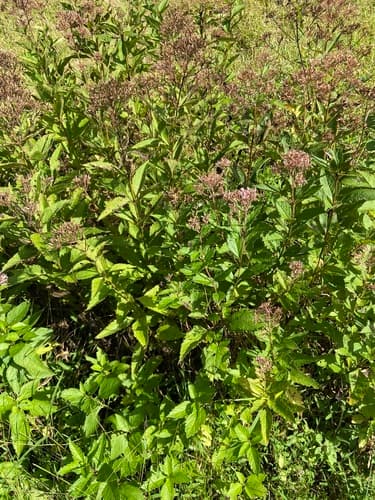
A tall, structural perennial of wet meadows and rain gardens that holds soil, drinks up runoff, and provides the largest butterfly landing pads in the late-summer garden.
The story
Named, by tradition, for Joe Pye, an 18th-century Mohican healer in Massachusetts who is said to have used the plant to treat typhus. Its old name was gravel root, for its use against kidney stones. The dusty pink domes have been a late-summer landmark of wet meadows for as long as anyone has written about them.
Worth knowing
- The compact 'Baby Joe' at the Theodore Roosevelt Sanctuary is a selection of the Long Island native coastal plain species.
- Stems are hollow and shelter small bees over winter.
- Vanilla-scented when the flowers are fresh.
Saving its seed
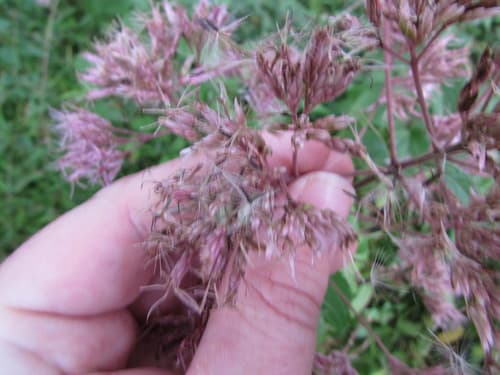
Ripe: Oct, Nov. Flower domes turn tan and fluffy.
Collect: Strip fluff on a dry day; sow with the fluff.
Sow: Winter-sow outdoors (jugs or flats) any time after the first hard freeze. Needs about 30 days of cold-moist stratification. Surface sow; needs light.
Seed saving calendar for your zip code →
Plant it instead of
- Butterfly bush: Offers adult butterflies nectar but hosts no caterpillars, and it seeds into riverbanks and disturbed ground. It is a nectar bar, not habitat.