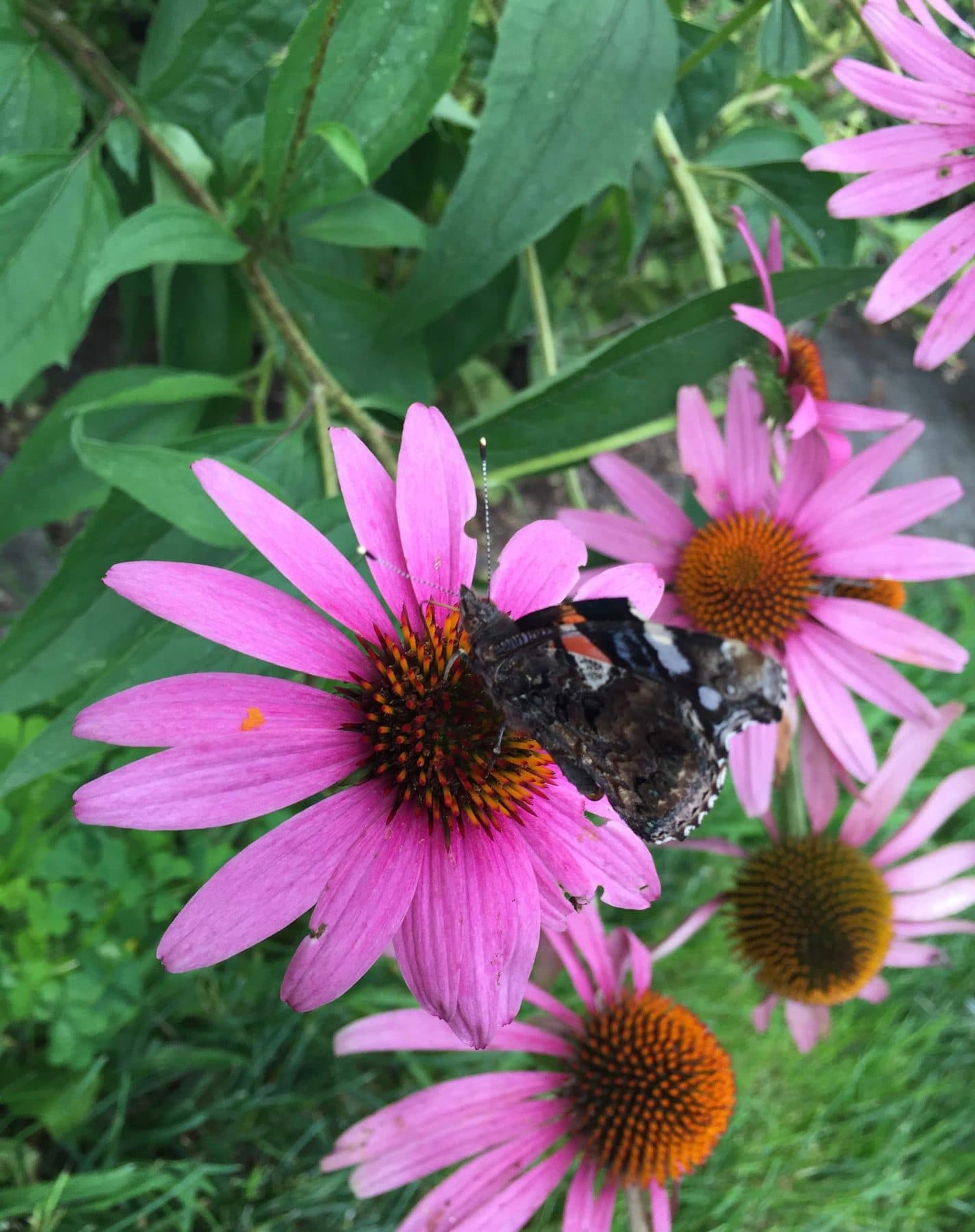
Native to Long Island
Purple Coneflower
Echinacea purpurea
The workhorse of the pollinator garden: months of nectar for bees and butterflies, then seed heads that feed goldfinches all winter.
JanBlooms Jun–SepDec
Eutrochium dubium
Asteraceae (aster family)
Dusty-pink domes in late summer that swallowtails and monarchs swarm. Ours is the compact 'Baby Joe' selection.
Bloom calendar
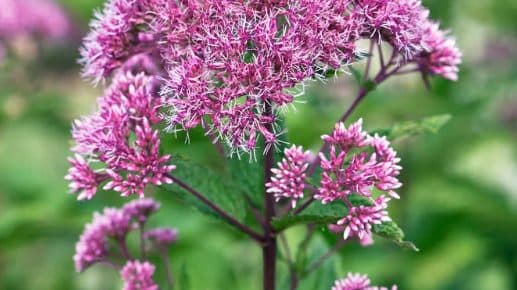
Coastal plain Joe Pye weed is native to Long Island and the Atlantic coast. Its big, soft, mauve flower heads open in July, August, and September, exactly when large butterflies are most active, and they are covered with tiger swallowtails, monarchs, and bumble bees.
At the Theodore Roosevelt Sanctuary we planted the compact 'Baby Joe' form, which grows two to three feet tall instead of the species' six-plus feet, so it fits in a planter without flopping.
Joe Pye weed is named for a Native healer credited with using the plant to treat fevers, and it has a long history in traditional medicine for fevers and inflammation.
More plants
Echinacea purpurea
The workhorse of the pollinator garden: months of nectar for bees and butterflies, then seed heads that feed goldfinches all winter.
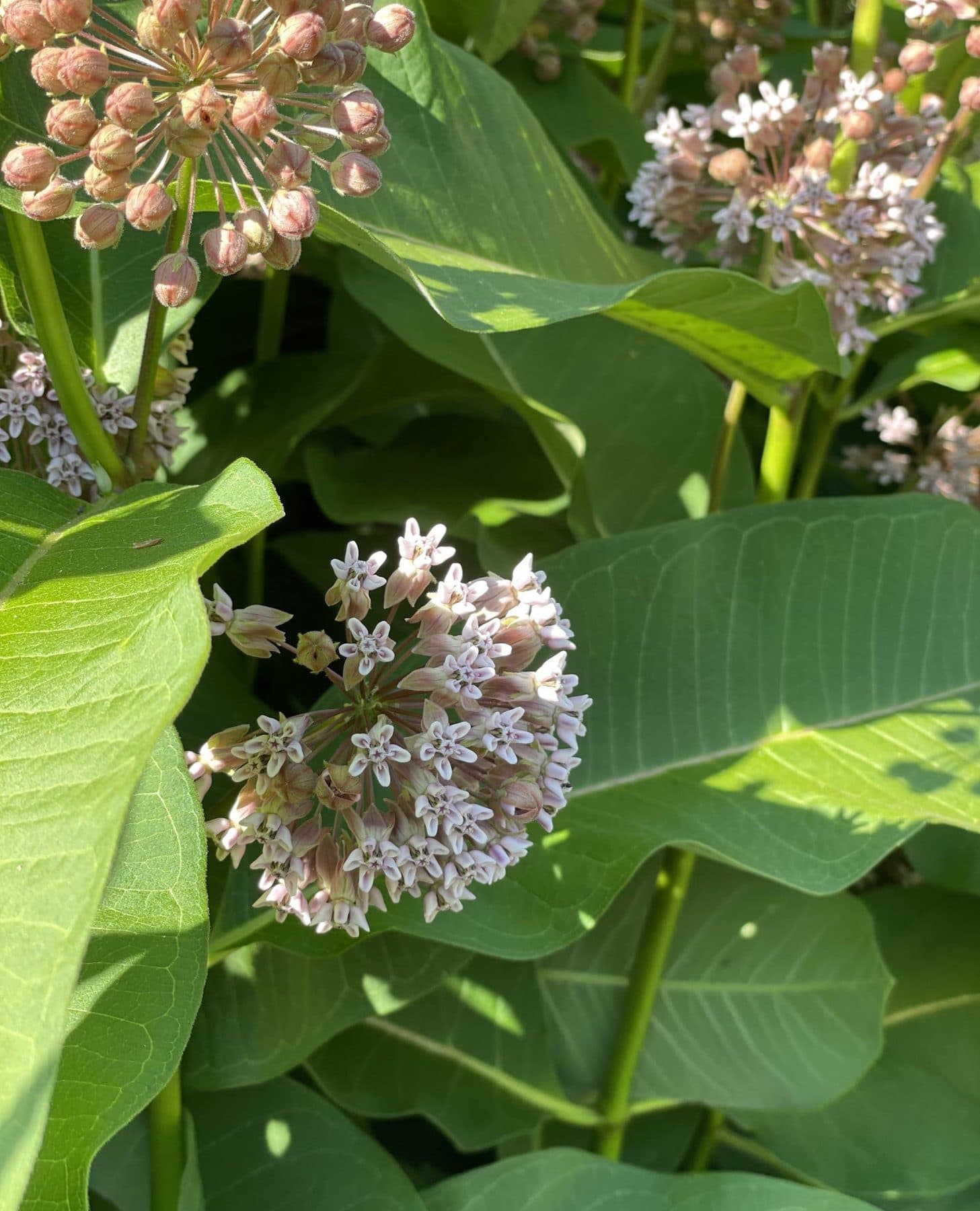
Asclepias syriaca
Monarch caterpillars eat only milkweeds, and this is the classic one. No milkweed, no monarchs.
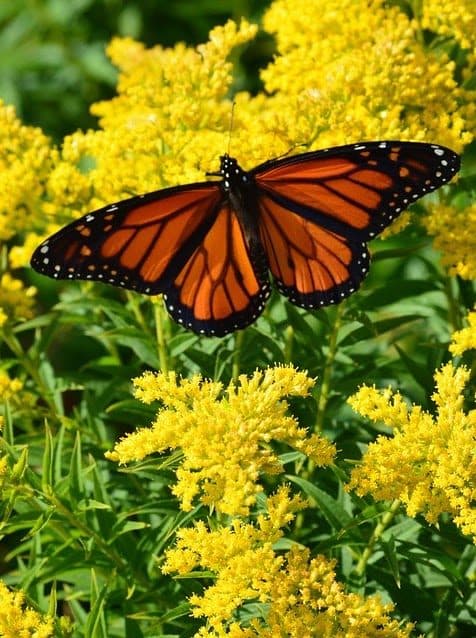
Solidago spp.
The most important late-season nectar source in the Northeast, and it does not cause hay fever.
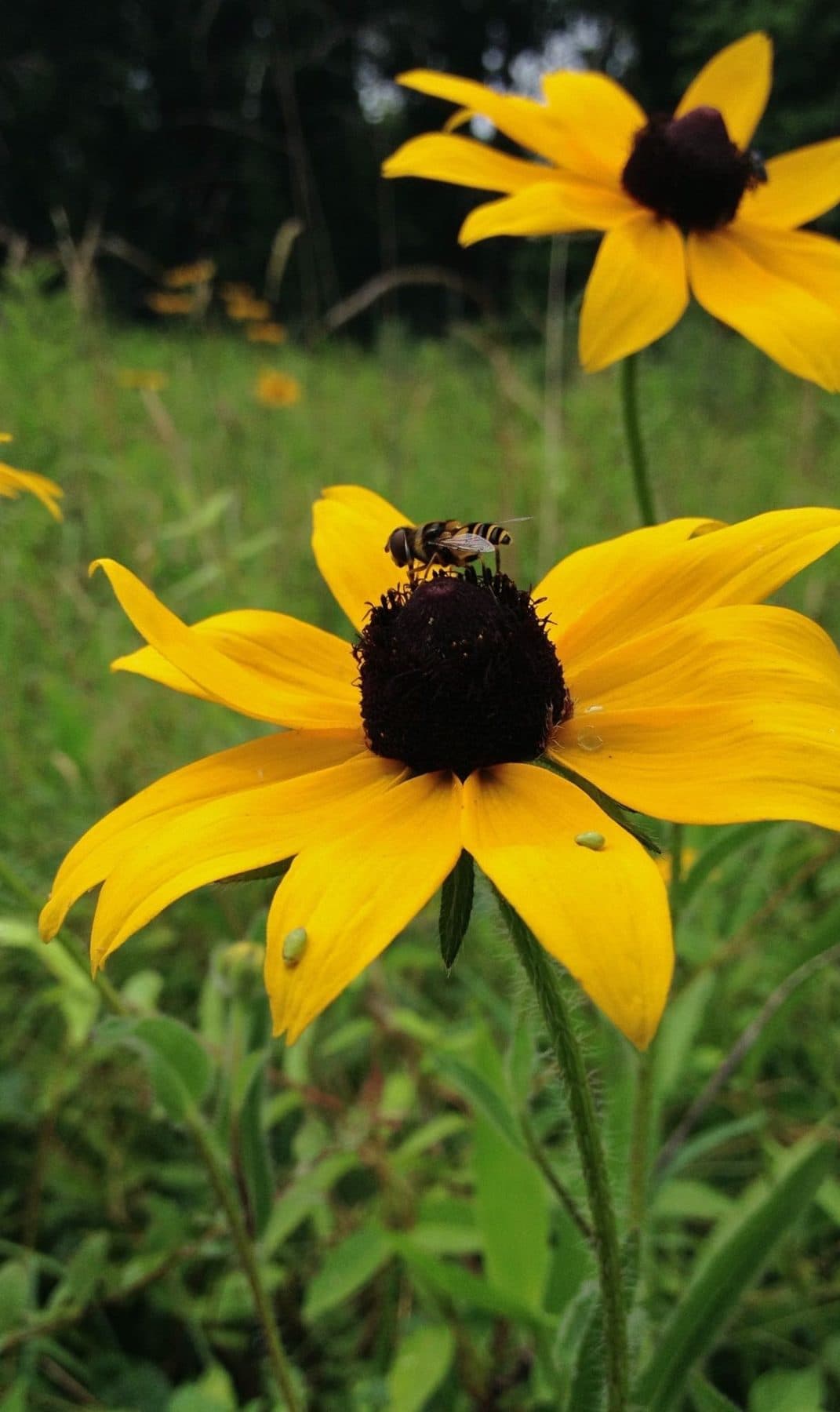
Rudbeckia hirta
Cheerful gold daisies that seed themselves around, feeding small bees and later the finches.