Who it feeds
Host plant for at least nine skipper butterflies, including Leonard's and cobweb skippers. Its fluffy seeds feed sparrows, juncos, and finches all winter, and its clumps shelter ground-nesting bees and overwintering insects.
Host plant for: Leonard's, cobweb, and dusted skippers.
What it does for the place
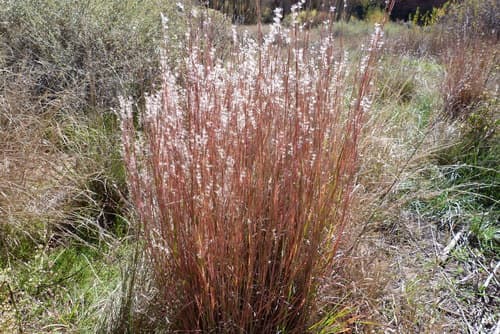
Deep, fibrous roots build soil and hold sand; the copper winter foliage stands through snow. It thrives on lean, dry soil where fertilizer-fed lawns fail.
The story
The dominant grass of the Hempstead Plains, the only true prairie east of the Alleghenies, which once covered 40,000 acres of central Nassau County. A 19-acre remnant survives at Nassau Community College. It is also the state grass of Kansas and Nebraska.
Worth knowing
- The name comes from the blue-green tint at the base of the stems in summer.
- Seed heads glow silver when backlit by low autumn sun.
- It was the grass that fed the bison of the tallgrass prairie.
Saving its seed
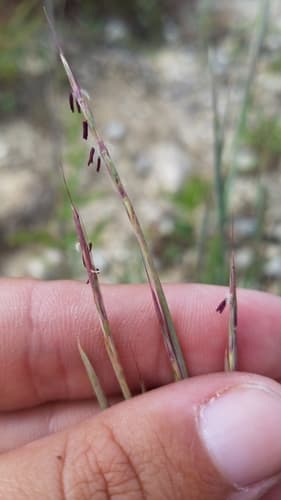
Ripe: Oct, Nov. Seed heads turn silver-white and fluffy along the stems.
Collect: Run a gloved hand up the stem to strip fluffy seed. Sow fluff and all.
Sow: Winter-sow outdoors (jugs or flats) any time after the first hard freeze. Needs about 30 days of cold-moist stratification.
Seed saving calendar for your zip code →
Plant it instead of
- Mugwort: The gray-green weed that takes over every disturbed lot, roadside, and garden bed on Long Island, spreading by rhizomes and suppressing neighbors chemically.
- Chinese silver grass (Miscanthus): The most popular ornamental grass seeds into roadsides and meadows, forming flammable clumps that displace native grasses.