Who it feeds
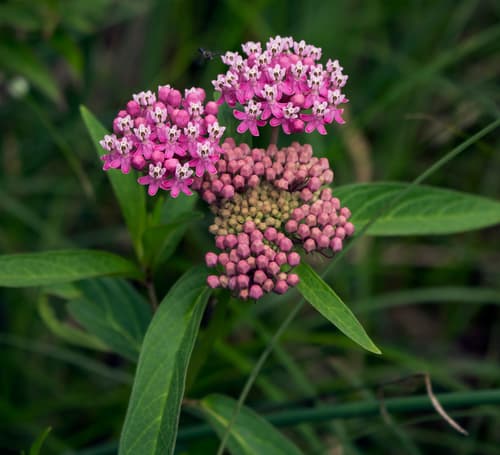
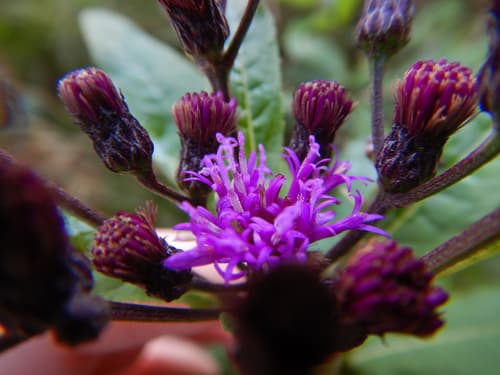
A butterfly magnet in August: monarchs, swallowtails, and skippers cover the magenta heads, and it hosts several moth caterpillars. Its late seed feeds finches.
What it does for the place
A tall wet-meadow perennial that deer refuse, making it a reliable backbone plant where browsing is heavy. Its purple pairs with goldenrod's yellow at the peak of migration.
The story
Named for New York, where it was first described, and for its tough, iron-hard stems. The genus honors William Vernon, an English botanist who collected in Maryland in 1698.
Worth knowing
- Cut back by half in June to keep it under five feet.
- The magenta is among the most intense of any native flower.
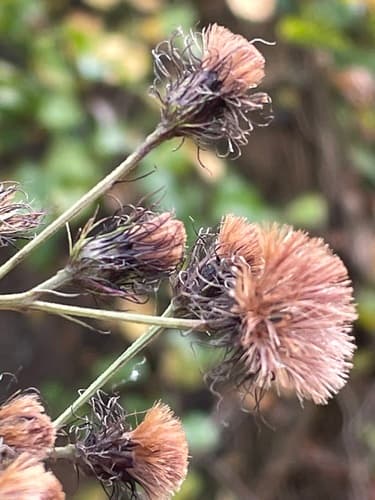
- Its rusty seed heads give the plant its name as much as the stems do.
Saving its seed
Ripe: Oct, Nov. Heads become rusty, fluffy tufts.
Collect: Pinch tufts into a bag.
Sow: Winter-sow outdoors (jugs or flats) any time after the first hard freeze. Needs about 30 days of cold-moist stratification.
Seed saving calendar for your zip code →
Plant it instead of
- Purple loosestrife: Takes over wetlands, replacing cattails and sedges that waterfowl and amphibians depend on. A single plant can shed two million seeds.
- Butterfly bush: Offers adult butterflies nectar but hosts no caterpillars, and it seeds into riverbanks and disturbed ground. It is a nectar bar, not habitat.