Who it feeds
Host plant for several skippers; cover for ground-nesting birds; winter seed for sparrows and juncos. Its dense clumps are where many beneficial insects overwinter.
Host plant for: Several skippers.
What it does for the place
Roots reach 10 feet down, storing carbon and holding sandy soil against wind and storm surge. It tolerates salt spray, drought, and flooding, which is why it belongs in coastal rain gardens.
The story
A tallgrass prairie native that also grows on Long Island's dunes and salt marsh edges. It has been studied for decades as a biofuel crop, and the Department of Energy chose it as a model energy crop in 1991.
Worth knowing
- A single plant can live 20 years or more.
- The airy seed heads turn gold in fall and stand all winter.
- 'Shenandoah' and 'Northwind' are selections chosen for form, not altered flowers, and work fine for wildlife.
Saving its seed
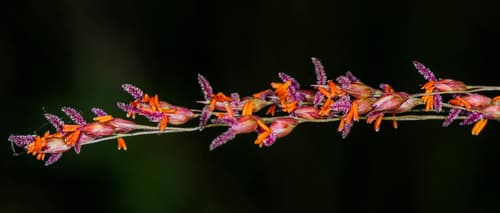
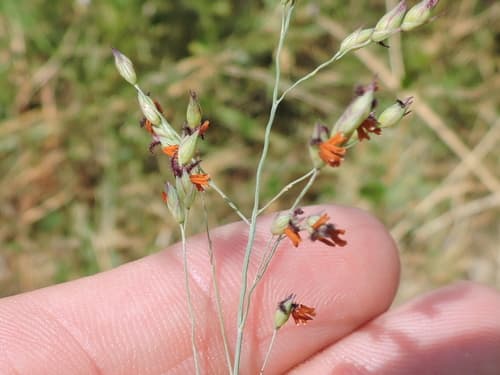
Ripe: Oct, Nov. Airy panicles dry tan; seeds fall when shaken.
Collect: Shake panicles into a bag.
Sow: Winter-sow outdoors (jugs or flats) any time after the first hard freeze. Needs about 60 days of cold-moist stratification. Fresh seed is strongly dormant; year-old seed germinates better.
Seed saving calendar for your zip code →
Plant it instead of
- Common reed (non-native Phragmites): The tall reed that walls off Long Island's salt marshes and pond edges, crowding out native marsh plants and reducing habitat for fish and birds.
- Chinese silver grass (Miscanthus): The most popular ornamental grass seeds into roadsides and meadows, forming flammable clumps that displace native grasses.