Who it feeds
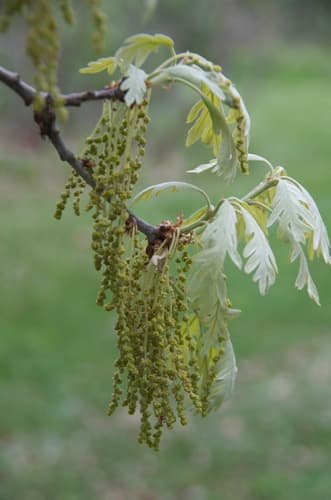
Oaks host more caterpillar species than any other plant in North America, well over 500 in the Northeast, which is what feeds nesting warblers, chickadees, and vireos. The acorns feed deer, turkeys, blue jays, wood ducks, and squirrels, and the bark shelters countless insects and bats.
Host plant for: 500+ caterpillar species.
What it does for the place
The keystone species of the eastern forest. Planting one oak does more for birds than a whole bed of perennials, and it will still be doing it in the 24th century.
The story
The tree of American history: the USS Constitution's hull, whiskey barrels, and colonial ships were all white oak, and the Charter Oak of Connecticut was one. Individual trees live 300 to 600 years. It is the state tree of Connecticut, Illinois, and Maryland.
Worth knowing
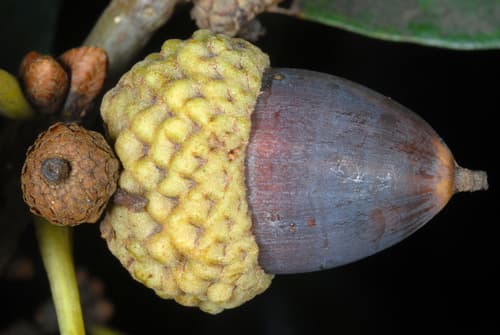
- White oak acorns are sweet and were a staple food of eastern tribes, ground into flour after leaching.
- Blue jays plant thousands of acorns a year and forget many of them, which is how oak forests spread north after the ice age.
- The wood's tyloses make it watertight, which is why it holds bourbon.
Saving its seed
Ripe: Sep, Oct. Acorns drop and caps come off easily; discard any with pinholes or that float.
Collect: Gather within days of dropping.
Sow: Sow fresh, right after collecting; seed loses viability if it dries. White oak acorns sprout immediately in fall. Plant an inch deep right away under hardware cloth to foil squirrels.
Seed saving calendar for your zip code →
Plant it instead of
- Norway maple: The most common street tree of the last century casts such deep shade and drops so many seedlings that nothing grows under it, and it displaces sugar and red maples in woodlands.
- Amur corktree: Planted as a street tree; female trees rain down berries that create dense seedling carpets in Long Island parks and preserves.